
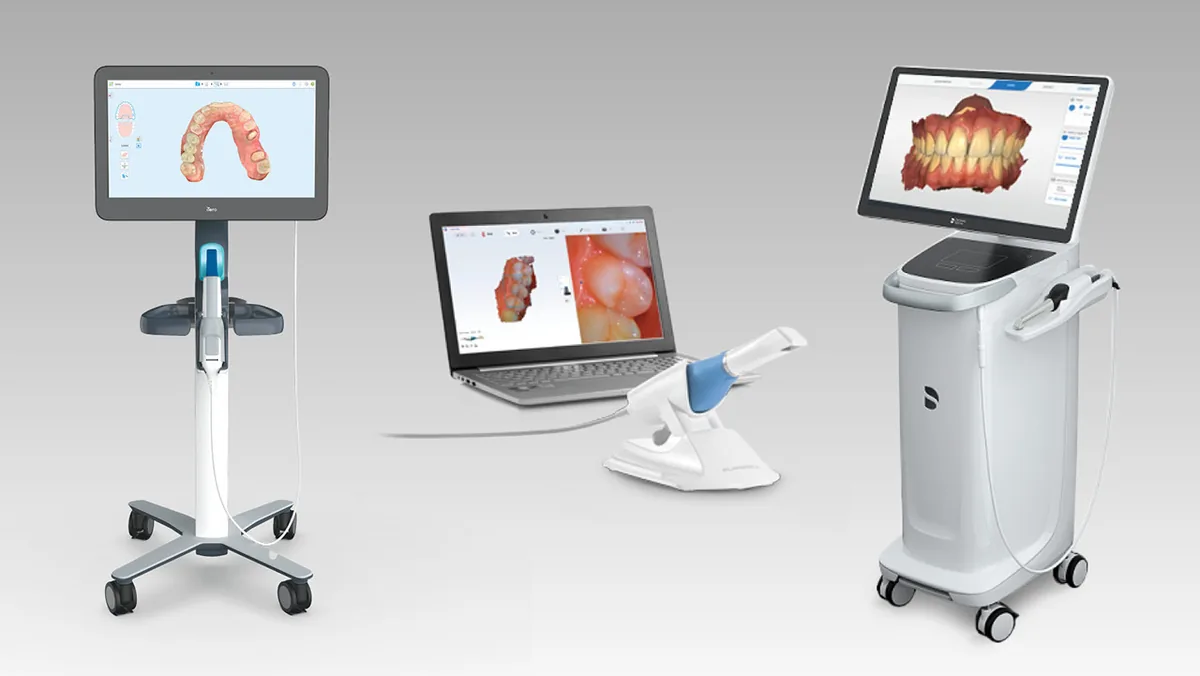
An intraoral scanner captures a 3D digital impression of the teeth and gums, replacing traditional impression materials in many workflows.
Why practices switch
- More comfortable for patients
- Faster sharing of cases with the lab
- Easy to rescan only the area that needs it
- Works with aligners, crowns, implants and guides
What to compare
- Accuracy and speed: look at published accuracy data and scan time for a full arch
- Color and texture capture: helpful for communication and shade assessment
- Weight and tip size: comfort for long scanning sessions
- Software and open file formats: STL/PLY/OBJ export lets you work with any lab
- Licenses: check whether software, updates or cloud services carry yearly fees
- Computer requirements and cart or laptop compatibility
Before you buy
Ask for a demo, confirm which indications are supported, and check training and technical support. Our team can help compare models.